
Friday, June 5, 2026
Patient-first disease language gains momentum in pharma
In pharma marketing, language is rarely accidental. Product names and messages are refined for clarity, compliance, and resonance. Now, a broader shift is accelerating: how diseases themselves are named and described is increasingly seen as a factor that can shape stigma, public understanding, and even care-seeking behavior.
Across media, clinical settings, and patient communication, stakeholders are paying closer attention to whether terminology unintentionally reinforces stereotypes or reduces complex conditions to simplistic labels.
When a label creates friction: mpox as a recent lesson
The 2022 outbreak of the disease long known as “monkeypox” highlighted how naming can become a public health issue. The term originated decades ago, based on early observations, and predates the World Health Organization’s 2015 guidance on best practices for naming diseases to avoid unnecessary negative impacts on animals and to reduce the risk of offending groups or fueling stigma.
During the outbreak, two concerns became central. First, a disease name can amplify geographic associations and trigger xenophobic narratives about regions where an illness has been endemic. Second, when a surge disproportionately affects a community that already faces discrimination, the label can add another layer of stigma and discourage people from testing, treatment, or vaccination.
Obesity: moving beyond BMI-only framing
Debates over disease language also include long-established medical constructs. Obesity is one example, particularly the reliance on body mass index (BMI) as a defining measure. Sommer Bazuro, Ph.D., chief medical officer at Omnicom Health, argues that obesity is a complex, chronic, biologically driven disease often linked with comorbidities, and that a single numeric threshold cannot capture the full clinical picture.
In that context, terms such as “clinical obesity” and “preclinical obesity” are being discussed as ways to better reflect health impact and risk, rather than weight category alone. The goal is improved identification of who has disease, who is at elevated risk, and who needs treatment now, while reducing misclassification.
For communicators, the framing matters because stigma and blame can worsen mental health burden and keep people from seeking diagnosis or care. It can also influence how obesity is perceived within the healthcare ecosystem, including access discussions.
PCOS renamed to PMOS to better reflect the condition
A more visible recent change involved polycystic ovary syndrome (PCOS), which has been renamed polyendocrine metabolic ovarian syndrome (PMOS). Bazuro describes the former label as potentially misleading because it can imply ovarian cysts define the condition, even though cysts are not required for diagnosis.
By emphasizing endocrine and metabolic dimensions, the updated name aims to reflect a broader clinical reality that may include fertility and mental health considerations. In practice, a more accurate label can support more coordinated care by reducing an overly narrow, organ-centered view of the condition.
Fitzpatrick scale: outdated proxies in science, trials, and AI
Language issues are not limited to disease names. The Fitzpatrick scale, introduced in the 1970s to estimate skin response to ultraviolet light, was designed to assess burning and tanning risk. Bazuro notes that it is frequently used as a proxy for skin color, race, or ethnicity in dermatology, clinical trials, medical education, and even AI datasets, despite not being intended for that purpose.
She points to major limitations: six categories compress the spectrum of pigmentation and can import socially constructed terms into scientific contexts. The implications are practical. Skin cancer risk can vary widely, and conditions such as psoriasis or eczema may present differently on darker skin than on lighter skin. If clinicians and tools are trained on incomplete or imprecise categories, delayed recognition and diagnosis can follow.
As a result, new scales are being proposed to describe skin tone more broadly and with clearer scientific definitions, with the aim of improving research quality, clinical assessment, and dataset design.
What it means for pharma communication
For pharma teams, the trend is not semantic nitpicking. Terminology affects understanding, trust, and whether people feel blamed or supported. In campaigns, HCP materials, and patient education, the emerging expectation is to audit language for unintended stigma, misleading mental images, and overly reductive definitions that can distort care pathways.
Related articles

ABDA launches new image campaign for local pharmacies
ABDA has launched a nationwide image campaign for local pharmacies and introduced a central online platform for patient information.

AbbVie named official pharmaceutical sponsor of PGA TOUR
AbbVie becomes official pharmaceutical sponsor of the PGA TOUR and launches Birdies for Brain Health to support brain health advocacy.
Novo Nordisk adopts Novo name in global rebrand
Novo Nordisk is adopting Novo as its everyday name in a global rebrand and updating its corporate culture with The Novo Way.

Sanofi launches COVID-19 campaign with USA Pickleball
Sanofi and USA Pickleball launch a US campaign to educate older adults about COVID-19 risks and the vaccine NUVAXOVID.

UCB presents epilepsy art initiative at EEC 2026
UCB launched Expressing Epilepsy at the European Epilepsy Congress in Athens, presenting works by three artists living with epilepsy.

AstraZeneca uses AI llama for new Breztri campaign
AstraZeneca promotes Breztri with an AI-generated llama, using humor and a LAMA wordplay to explain the triple therapy.

Lilly takes obesity campaign to TV
Lilly Germany has launched a TV campaign on obesity, citing surveys on stigma, cost barriers and gaps in structured care.
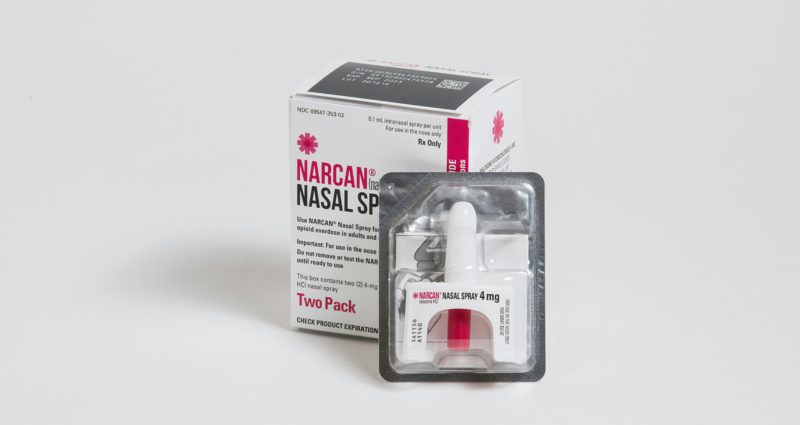
Emergent continues overdose education with campus and Canada initiatives
Emergent is expanding opioid overdose education in the U.S. and Canada through campus events, naloxone training and public partnerships.