

Tuesday, August 25, 2026
Ads in ChatGPT: What pharma marketers need to know
OpenAI is preparing advertising formats in ChatGPT and says the first test will begin in the United States on February 9, 2026. For pharma and healthcare marketers, this is a relevant development because ChatGPT is used in many information settings, from professional research to everyday orientation. At the same time, the model comes with strict boundaries: ads are designed to be separate from answers, excluded from sensitive or regulated conversations, and unable to influence ChatGPT responses.
This is not simply another search or social media placement. It is a conversational environment where a sponsored message may appear while a user is structuring information, comparing options or preparing a decision. For healthcare communication, that creates potential, but also clear compliance limits.
What OpenAI has announced
According to the FAQ, ads may appear for users on Free and Go plans. Plus, Pro, Business, Enterprise and Edu accounts are set to remain ad-free. Accounts identified as belonging to people under 18 will not be shown ads. Temporary Chats are also excluded.
Ads are expected to appear below a ChatGPT response. They will be labeled as sponsored and visually separated from the answer. OpenAI states that ads do not change the generated response. Advertisers are not supposed to shape, rank or alter ChatGPT answers.
The initial test is planned for the United States. Advertiser availability is expected to expand gradually. Personalized ads are not initially planned for the European Economic Area or Switzerland, according to the FAQ.
How the system works in simple terms
The ad delivery process runs through a separate advertising system. This system evaluates whether an ad is relevant to the current context. Signals may include the topic and intent of the active conversation, the landing page, ad title and copy, advertiser-provided context hints and targeting settings.
If several ads are eligible, a mix of relevance and bids can determine which ad appears first. If ad personalization is enabled, selected signals from the broader ChatGPT experience may also be used. The FAQ says this can include past chats or memory if the relevant user settings are active.
For marketers, the key point is simple: the ad is not part of the answer. It appears beneath the response as a paid placement. Users can also see why an ad is shown, hide or report it, and manage personalization settings.
Opportunities for HCP communication
For communication with health care professionals, this kind of environment could become interesting if the platform allows healthcare advertising in the relevant category and region. HCPs increasingly use generative AI for research, summarization and workflow support. A placement near professional information-seeking could point to scientific resources, medical education, study materials, congress content or service platforms.
The difference from many display environments is the user situation. The ad may appear when a person is actively exploring a topic. That could make relevance stronger than in purely contextual banner placements. However, it remains unclear which targeting options will actually be available for regulated healthcare communication and what eligibility requirements advertisers will need to meet.
Pharma companies should therefore avoid simply transferring existing campaigns into the new environment. A dedicated channel approach will be needed, with medical, legal and regulatory review, precise landing pages, clear campaign objectives and a strict separation between professional communication, product information and general education.
Disease awareness: potential within limits
Disease awareness campaigns could in principle benefit from an AI advertising environment because people often use ChatGPT to make complex topics easier to understand. A sponsored reference to quality-controlled information could create attention in suitable, non-sensitive contexts.
The central limitation is policy. OpenAI says ads are not eligible to appear near sensitive or regulated topics, including personal health, mental health and politics. Health advertisers may be eligible under certain conditions, but ads should not be placed near sensitive user content.
For disease awareness, this means campaigns must be designed carefully. The closer a conversation is to personal symptoms, diagnoses or treatment questions, the less suitable it is likely to be for advertising. More realistic use cases may involve broad education around prevention, care pathways or neutral information resources, provided the platform permits them.
Privacy and control will shape the channel
OpenAI says it does not share conversations with advertisers and does not sell user data to them. In the early test, advertisers are expected to receive aggregated performance data such as views and clicks. Chats, chat history, memories, names, email addresses, precise locations, IP addresses and sensitive information are not to be shared with advertisers.
Users can turn off ad personalization. In that case, ads may still be based on the current chat context, but other chats, ad history or topics should not be used for selection. Users can also delete ads data, with removal from servers taking up to 30 days according to the FAQ.
What pharma marketers should prepare now
- Check eligibility: Healthcare advertising is regulated. Companies should monitor which countries, categories and advertiser requirements OpenAI opens up.
- Improve landing pages: Since landing pages, titles and copy may contribute to relevance, clear and compliant destination pages will matter.
- Separate use cases: HCP communication, disease awareness and product-related communication need distinct strategies and review processes.
- Plan measurement realistically: The early test focuses on aggregated metrics such as views and clicks. Deep user-level profiles are not part of the announced model.
- Define brand safety: Pharma companies should decide in advance which contexts are acceptable and which must remain excluded.
A new channel, not a shortcut
Ads in ChatGPT could become a new touchpoint for healthcare brands, especially in moments when users actively seek and organize information. For HCP communication, this may create a route to professional reach. For disease awareness, it could become an additional channel when the focus is broad education.
The main message for pharma marketers is that this channel is likely to be shaped by policy, privacy and user control. Early testing should therefore measure not only media performance, but also compliance, transparency and trust.
Related articles
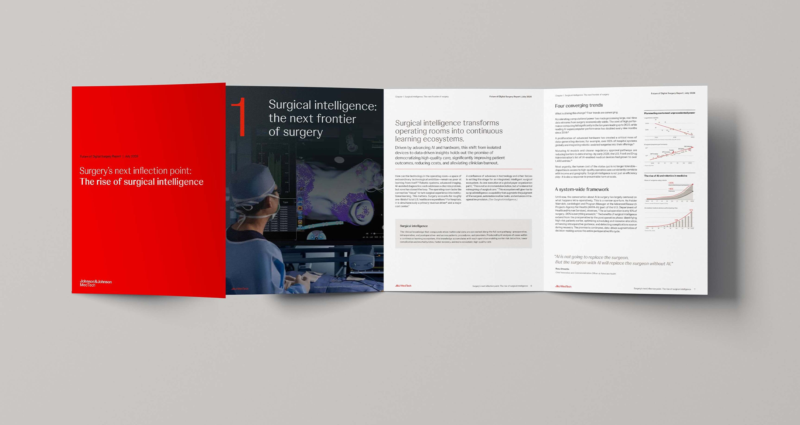
Johnson & Johnson publishes report on surgical intelligence
Johnson & Johnson’s new report outlines how connected data, AI and governance could shape the next stage of digital surgery.

From Anonymous Clicks to Connected HCP Journeys: Why Integrated SSO Matters in Pharma Marketing
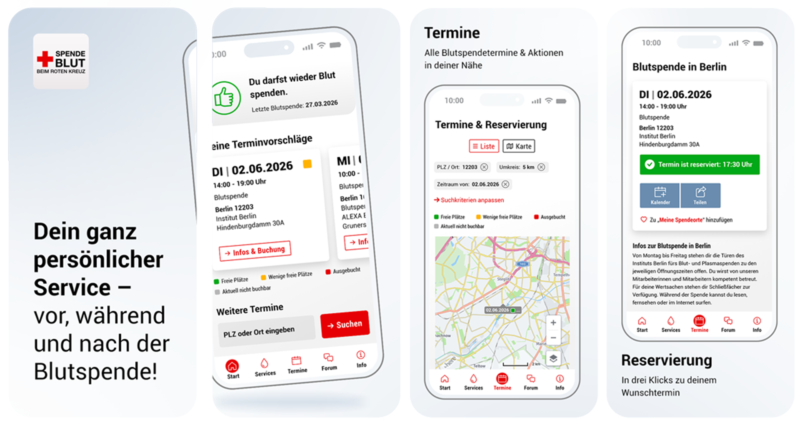
German Red Cross blood donation services present digital donor service 2.0
The German Red Cross blood donation services have introduced donor service 2.0, a digital tool designed to support blood donors.
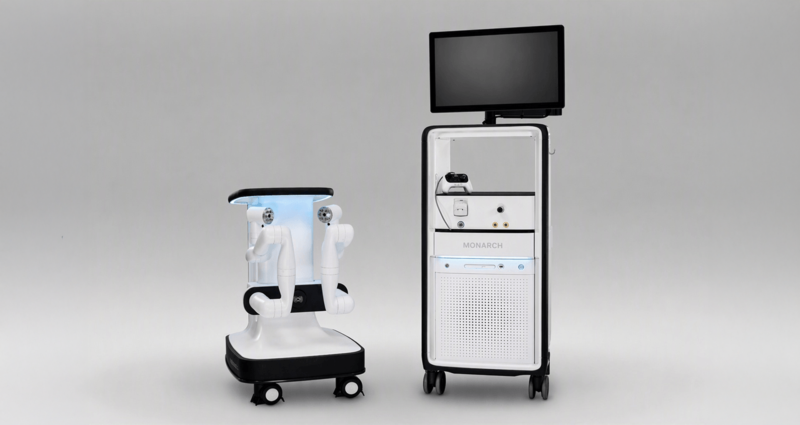
Johnson & Johnson launches MONARCH platform in the Middle East
Johnson & Johnson reports the first Middle East use of its MONARCH platform for robotically assisted bronchoscopy at Cleveland Clinic Abu Dhabi.
Nia Health and AbbVie Germany collaborate on AI-supported atopic dermatitis care
Nia Health and AbbVie Germany are collaborating on an AI-supported care offering for atopic dermatitis patients and treating physicians.
Magnosco presents AI assistant for skin cancer diagnostics
Magnosco has developed idea®, an AI tool for dermatoscopy, and is preparing CE certification as a class IIa medical device.
Guardoc uses Amazon Nova for clinical document workflows
Guardoc Health uses Amazon Nova models via Amazon Bedrock to automate clinical document processing for long-term care providers.

Roche bundles AI knowledge for medical professionals
Roche’s AI Education Hub brings together medical AI resources, including a white paper, prompting guides and expert videos for professionals.