
Monday, December 8, 2025
“Good Health 2030” Initiative Presents Results Report to Federal Minister of Health Nina Warken and Outlines Key Reform Pathways for a Future-Proof Healthcare System
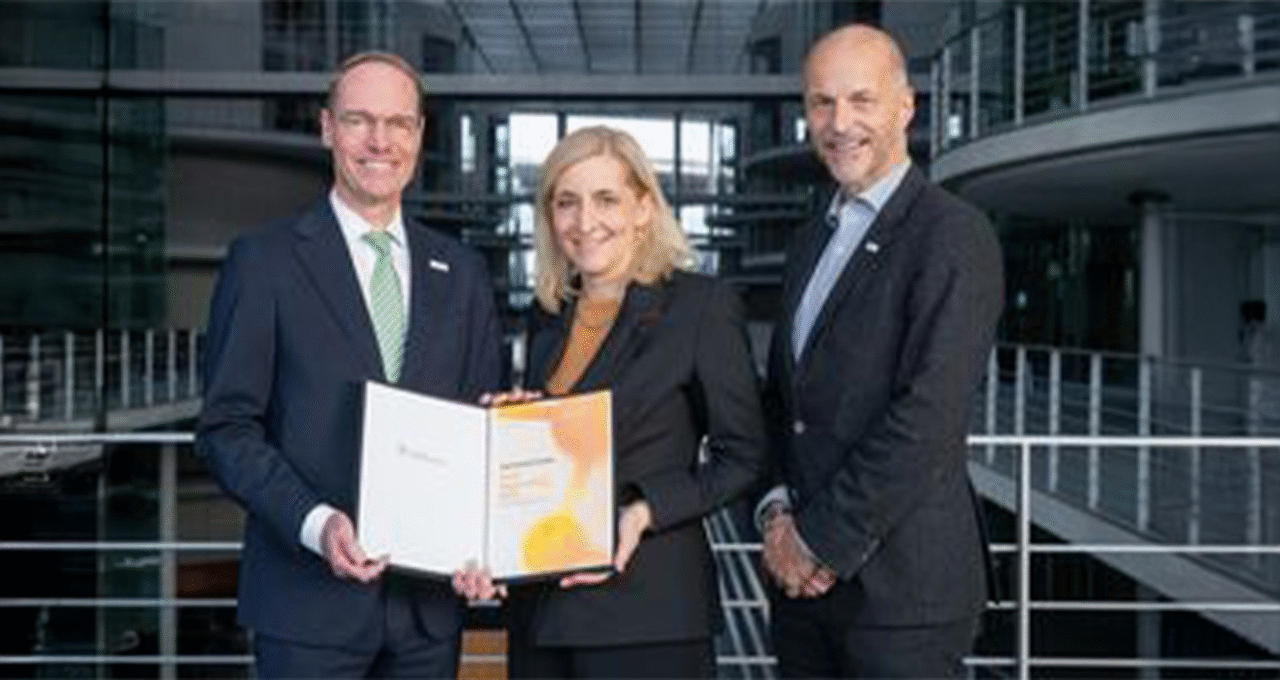
During the 2025 Health Care Day in Berlin, the “Good Health 2030” initiative unveiled its new results report and presented it personally to Federal Minister of Health Nina Warken at the German Bundestag. Initiated by the German Pharmaceutical Industry Association (BPI), the alliance unites 24 institutions across all sectors of the healthcare system, including representatives from the medical profession, pharmacy associations, the healthcare industry, health insurers, hospitals, patient organizations and nursing.
From the outset, the members of the initiative shared a common goal: to develop a healthcare system that is cross-sectoral, efficient, and future-oriented. Over the past twelve months, the initiative conducted a series of workshop discussions, rethinking healthcare delivery beyond traditional sector boundaries. Oliver Kirst, Chairman of the BPI, emphasized: “For the first time, we brought all relevant stakeholders together at one table and demonstrated how much potential emerges when perspectives are combined.”
Recognition Through Personal Acceptance in the Bundestag
The importance of the results report was underscored by the personal attendance of Minister Nina Warken, who took time – despite a tightly scheduled day – to receive the report in the Bundestag. This gesture highlights the political relevance of the initiative and acknowledges the collaborative effort behind the process.
Outcomes From Four Working Groups
The results report consolidates insights from four working groups: Prevention, Digitalization, Innovation, and Financing. Together, they outline concrete policy recommendations for key areas of reform:
Prevention:
Anne-Kathrin Klemm of the BKK Dachverband e. V. stresses that investments in prevention and health promotion strengthen population health while easing pressure on the system.
Digitalization:
Dr. Ina Lucas from the ABDA emphasizes that digitalization must demonstrate clear value and should not be driven merely by problem-solving logic. Only then can a modern and connected healthcare landscape emerge.
Innovation:
Oliver Kirst highlights the urgent need to simplify regulatory structures. Innovations have the potential to enhance system efficiency and reduce costs, but they often stall due to excessive complexity.
Financing:
Jürgen Graalmann from Die BrückenKöpfe GmbH points out that sustainable healthcare financing must focus primarily on actual care needs rather than simply increasing budgets.
The Advisory Board also includes Jens Bussmann (German Association of University Hospitals) and Dr. Kai Joachimsen (BPI).
Looking Ahead: Continuing the Initiative in 2026
With the publication of the results report, the initiative enters its next development phase. It aims to serve as a constructive basis for political debate and stimulate progress toward a future-proof healthcare system. Kirst stresses that the next step must be implementation: “Good ideas must now be turned into concrete reforms.”
In 2026, the initiative will expand its scope to additional fields such as nursing, workforce development, and reducing bureaucracy. All stakeholders in the healthcare sector are invited to contribute to this ongoing process–working together to shape durable, long-term solutions.
Related articles
GSK agrees to acquire 35Pharma, adding pulmonary hypertension asset HS235
GSK has agreed to acquire Canada’s 35Pharma for $950m in cash, gaining HS235, an activin signalling inhibitor being developed for pulmonary hypertension.

Novo Nordisk partners with Vivtex on oral biologics
Novo Nordisk and Vivtex will work on oral biologics for obesity and diabetes. Vivtex is eligible for up to US$2.1 billion plus tiered royalties.
Merck reshapes business ahead of Keytruda patent expiry
Merck & Co. is splitting operations into two divisions to prepare for Keytruda’s 2030 patent expiry and to broaden its portfolio.

medac Group exits diagnostics business to focus on pharma
medac Group is divesting its diagnostics activities via a management buy-out to focus on pharma. The business will continue as mevida Diagnostika.

Hameln to host second nursing congress on the future of care
Sana Klinikum Hameln-Pyrmont will host the “Pflege bewegt” nursing congress on 16 April 2026 in Hameln, focusing on future nursing practice.

DMEA sparks Award 2026 opens call for digital health theses
DMEA has opened applications for the sparks Award 2026, honouring bachelor’s and master’s theses on healthcare digitalisation. Deadline: 31 January 2026.

WEFRA MEDIAPLUS GLOBAL HEALTH Sets New Standards in Healthcare Media
With WEFRA MEDIAPLUS GLOBAL HEALTH, Mediaplus Group and WEFRA LIFE GROUP combine their strengths to deliver scalable, international healthcare campaigns. The joint venture connects global strategies with strong local execution.
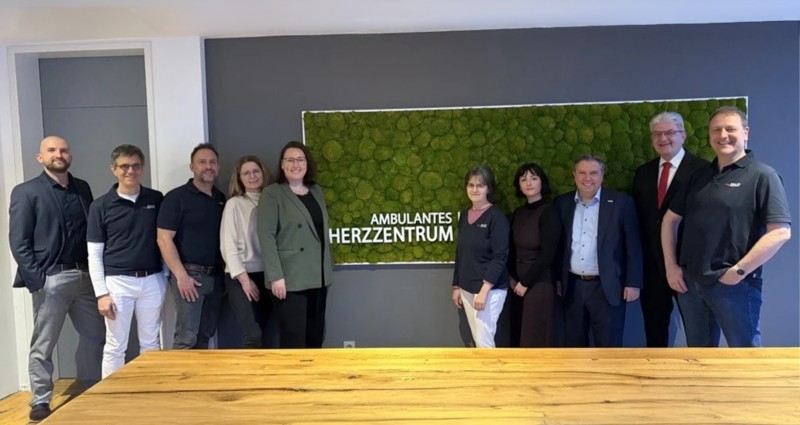
New care concept strengthens outpatient follow-up for cardiac patients
Novartis Germany and the Ambulatory Heart Center Kassel are launching a new outpatient care concept to support structured follow-up care for cardiac patients, with a focus on LDL cholesterol. The goal is to sustainably reduce risk factors through standardized treatment pathways.