

Thursday, August 13, 2026
Statutory reimbursement for cannabis flower ends without transition period
A new legal framework for medical cannabis has applied in Germany’s statutory health insurance system since 30 July 2026. The change is linked to the GKV Contribution Rate Stabilisation Act, known as GKV-BStabG. According to the information provided, statutory reimbursement for medical cannabis flower has ended. The law does not include a transition period for patients who were already receiving reimbursed treatment.
The change affects prescribing physicians, pharmacies, manufacturers and patients. It is particularly relevant for people insured under the statutory system who had been treated with cannabis flower under medical supervision for an extended period and whose treatment had previously been covered by their health insurer.
What changed at the end of July
The Bundestag passed the GKV-BStabG on 10 July 2026. It was published in the Federal Law Gazette on 29 July and took effect the following day. For cannabis flower, the consequence described by the initiative is clear: statutory reimbursement no longer applies.
The situation differs for cannabis extracts, dronabinol and nabilone. These products remain reimbursable in principle, but under additional conditions. The law gives priority to authorised finished medicinal products as part of a six-month treatment trial.
On 6 August 2026, the National Association of Statutory Health Insurance Physicians, KBV, and the National Association of Statutory Health Insurance Funds, GKV-Spitzenverband, agreed on a joint interpretation of parts of the new rules. Under this interpretation, the six-month trial should apply only to indications for which an authorised finished medicinal product is available. The indications named are spasticity in multiple sclerosis, chemotherapy-induced nausea and vomiting, and rare forms of epilepsy.
For severe pain or other indications without an authorised finished medicinal product, physicians may prescribe an extract or another cannabis-based medicine immediately when starting treatment. Follow-up prescriptions for extracts or compounded preparations also remain possible. If treatment is changed, a new approval from the health insurer may be required unless the prescribing specialist group is exempt from the prior approval requirement.
Cannabis flower remains the main point of dispute
The clarification by KBV and GKV-Spitzenverband does not change the status of cannabis flower, according to the initiative. For this dosage form, there is no longer a statutory reimbursement entitlement. Patients with previously approved and ongoing flower therapy are also not covered by a statutory transition period.
For patients insured under the statutory system, a private prescription remains possible, but the costs have to be paid out of pocket. Privately insured patients and self-payers are not directly affected in the same way by the statutory change. For privately insured patients, reimbursement depends on the individual insurance tariff.
Implementation questions remain
The application of the new rules continues to raise practical questions. A key issue is how ongoing therapies should be handled. For extracts and compounded preparations, the 6 August interpretation addressed part of the uncertainty. For cannabis flower, no comparable solution currently exists.
The interpretation of the six-month treatment trial is also relevant. According to the joint view of KBV and GKV-Spitzenverband, such a trial can be stopped early, for example if it is ineffective or not tolerated. Another cannabis-based medicine can then be used. However, the joint interpretation is not a separate binding legal norm.
Regional interpretations may also differ. The input refers to a circular from the Bavarian Association of Statutory Health Insurance Physicians dated 30 July, which reportedly read the six-month period as a fixed minimum duration. The later joint interpretation by KBV and GKV-Spitzenverband takes a different view.
Industry-backed initiative calls for transition rules
An initiative supported by companies and organisations in the medical cannabis field aims to document the consequences of the new legal situation. It is collecting accounts from patients and medical practices and intends to bring these cases into the political debate.
Supporters include Cannamedical Pharma, Demecan and Four 20 Pharma. The companies point to uncertainty in medical care and are calling for a practical solution for patients who are stable on cannabis flower. Their central demand is a transition rule for medically documented ongoing therapies.
The initiative is also seeking legally robust implementation guidance, a review of the broad exclusion of cannabis flower from reimbursement, and a more targeted approach to cost control. It specifically refers to reforming the Hilfstaxe and reimbursement prices for cannabis preparations.
Market implications
For the medical cannabis market, the new framework has several implications. It affects prescribing routines in medical practices, pharmacy counselling, reimbursement checks by health insurers and planning security for manufacturers and wholesalers.
Continuity of care is a sensitive issue. If an ongoing therapy is no longer reimbursed, physicians need to evaluate alternatives, inform patients about options and, where necessary, consider new approval procedures. At the same time, the economic environment changes for suppliers of cannabis flower in the statutory reimbursement segment.
The political and legal debate is therefore likely to continue. While extracts, dronabinol and nabilone remain reimbursable under certain conditions, the exclusion of cannabis flower remains the central conflict.
Related articles

From Anonymous Clicks to Connected HCP Journeys: Why Integrated SSO Matters in Pharma Marketing

GSK plans new global R&D centre in Cambridge
GSK will invest £400 million in a new Cambridge R&D centre and shift UK research operations from Stevenage by 2029.

Bausch + Lomb highlights two product launches
Bausch + Lomb highlights two launches: a vitrectomy cutter for Europe and preservative-free lubricant eye drops in the United States.
argenx to acquire Forte Biosciences and expand immunology pipeline
argenx plans to acquire Forte Biosciences and add FB102, a first-in-class anti-CD122 antibody, to its immunology pipeline.
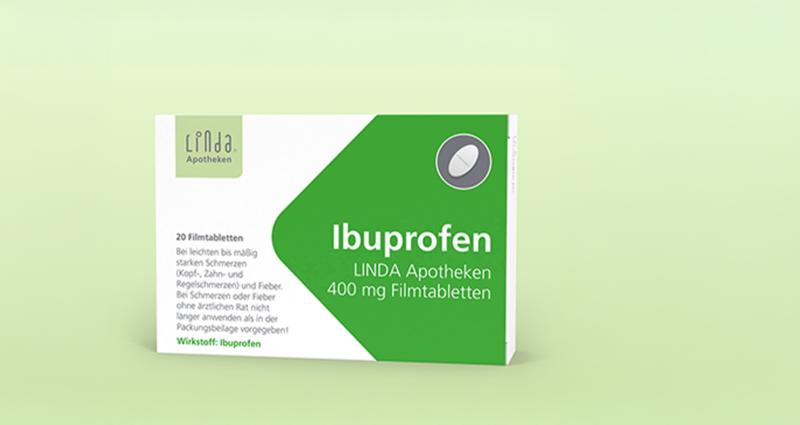
LINDA AG launches first OTC private-label medicine with ibuprofen
LINDA AG is introducing Ibuprofen 400 mg as the first OTC medicine under its own pharmacy brand across LINDA Premium pharmacies.
Lilly to acquire AtaiBeckley and expand depression pipeline
Lilly plans to acquire AtaiBeckley, adding clinical neuroplastogen programs for treatment-resistant depression to its neuroscience pipeline.
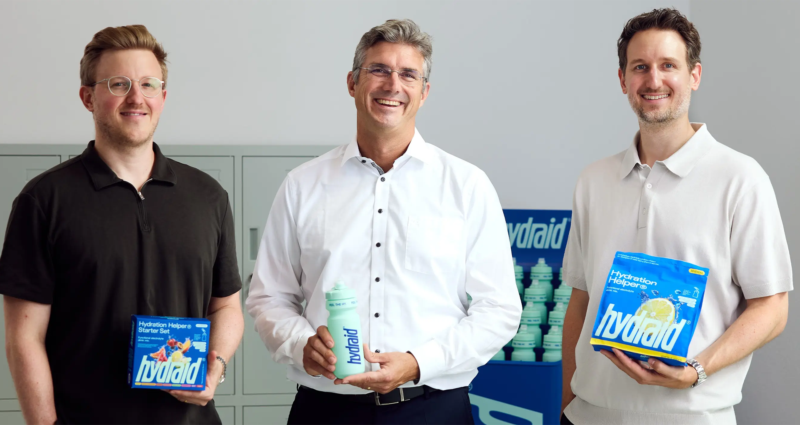
Schwabe takes majority stake in Hydraid
Schwabe Group takes a majority stake in Hydraid, strengthening its position in natural health solutions and functional sports hydration.

Besins acquires UniD to expand pharmatech capabilities
Besins Healthcare acquires Belgium-based UniD Manufacturing to expand long-acting drug delivery and hormone health innovation capabilities.